The greatest concentration of Syrian refugees in the world is in the zone of destruction created by this week’s earthquake in Turkey.
Already living on the political and economic margins and often in substandard housing, refugee communities in the region will disproportionately suffer from this natural disaster. At Article 26 Backpack we stand with them and all those harmed by the quake.
British-Ghanian architect David Adjaye’s design of the National Museum of African American History and Culture on the National Mall in Washington, DC grabs you by both shoulders and demands that you not look away as it draws you down into the painful story at the heart of America’s past.
The University of California, Davis Human Rights Studies Program recognizes that University of California graduate students, researchers, student employees and postdocs have engaged in efforts to secure fair wages, benefits and working conditions. Considering these efforts, we express our support for our fellow academic workers and call on the UC to bargain in good faith and hope a just and fair agreement can be achieved quickly.
We also reaffirm our support for Article 23:3 of the Universal Declaration of Human Rights (1948)
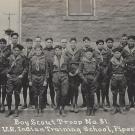
On a warm Fall afternoon in 1915 in Syria, a Protestant missionary lifted a five-year-old Armenian boy, Karnig Panian (1910-1989), onto a train headed to Beirut. From there he was taken to a small village called Antoura, where a boarding school had been established to transform Armenian and Kurdish children into Turks. Panian’s family had been murdered over the previous months as part of the World War One-era genocide of the Armenians of the Ottoman Empire.
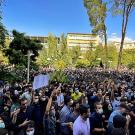
The UC Davis Human Rights Studies Program stands in solidarity with the people of Iran as many have taken to streets in protest of the death in custody of a 22-year-old Kurdish Iranian woman, Zhina Mahsa Amini. She was arrested and beaten by members of Iran’s Gašt-e Eršād or Guidance Patrol, more commonly called, the “morality police” for allegedly wearing her hijab — a legally required headscarf — improperly.
Today is the 56th anniversary of the premier of Star Trek. Unique among Human Rights Studies programs globally, at UC Davis we emphasize the role of literature, the arts, music and film and television in human rights thought, practice and advocacy.
UC Davis Human Rights Studies stands in solidarity with the Davis Jewish community in the face of a recent hate incident and ugly episode of Holocaust denial. We are committed to a campus where all are welcomed and safe and where civil discourse based on facts and evidence are practiced widely and truth matters.
Welcome to Article 26 Backpack’s first newsletter!
Produced by the Article 26 Backpack team at the University of California, Davis, the Article 26 Quarterly Newsletter provides resources, news, and relevant information to Backpackers to support them in protecting their human right to education. This quarter, we have information regarding our newly created Ukrainian and Russian versions of Article 26 Backpack, as well as free language exam and academic credentialing resources.
During Spring Quarter 2022, we polled students (n=90) in three Human Rights Studies classes (two upper division and one lower) about their interest in having a Human Rights related internship as well as the financial hurdles they experienced taking advantage of internships. The majority of Human Rights related internships are unpaid and typically ask interns to volunteer anywhere from 20-40 hours of their time per week.
University of California, Davis – The Article 26 Backpack now includes Ukrainian and Russian in order to meet the challenges for displaced people and refugees as a result of the recent war in Ukraine. This advancement will help displaced students, researchers, scientists, and human rights activists, all of whom are targets in Putin’s war on higher education.
Noted scholar of genocide, Alexander Hinton, citing both the transfer of Ukrainian children to Russian institutions and families and the embrace of the specious argument by Putin and others that the war against Ukraine is an effort to cleanse — to “de-Nazify” — is evidence enough that beyond war crimes and crimes against humanity, Russia is committing genocide in Ukraine. I’m in general agreement with Hinton, especially as news of the